Characterizing Planetary Atmospheres
How can we identify and learn about an exoplanet's atmosphere?
What Is the Transit Method?
Simply put, a transit is an event where a planet passes between its host star and an observer. A transit lets us detect an exoplanet from many light years away — not by directly imaging the planet itself, but by seeing the dimming of the star's brightness during the transit.
This dimming can yield a surprising amount of data about a planet: its orbit, its size, and even its atmospheric composition.

The Most Successful Method of Exoplanet Detection
To date, over 4,000 exoplanets have been discovered by astronomers around the world. The bulk of these discoveries — around 75% — were made using the transit method.
The deeper the transit, the larger the planet
The depth of a transit is directly related to the planet's radius. In short, a big planet blocks more light!
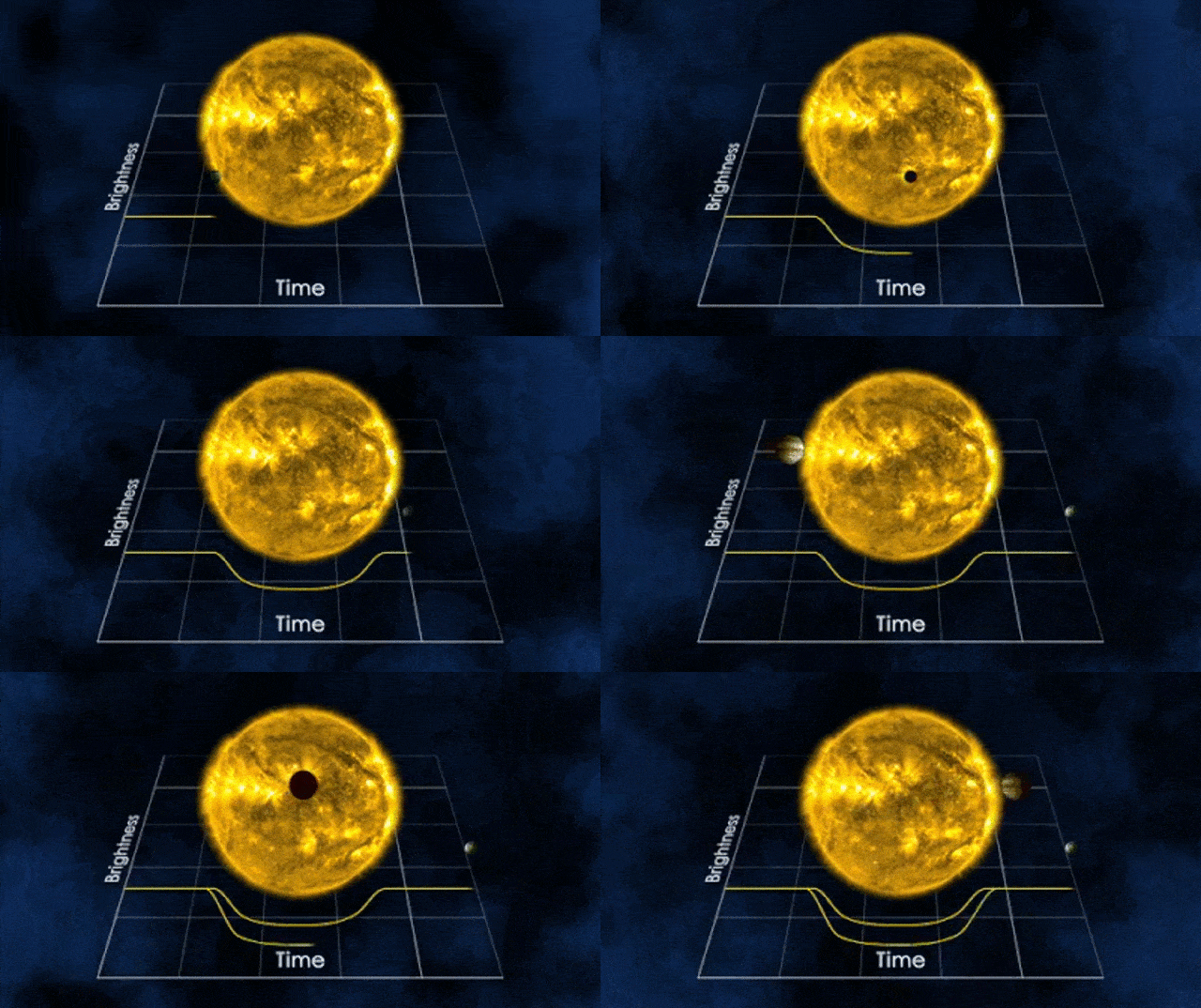 Image courtesy of Harvard
Did you know we can observe transits in our own solar system?
On June 5, 2012, the Solar Dynamics Observatory (SDO) observed a rare, predictable solar event — the transit of Venus across the face of the Sun. The next time this phenomenon will be observed is in the year 2117. Mark your calendar! Like POET, the SDO is a space-based telescope, which allowed it to capture this six-hour event with extreme clarity.
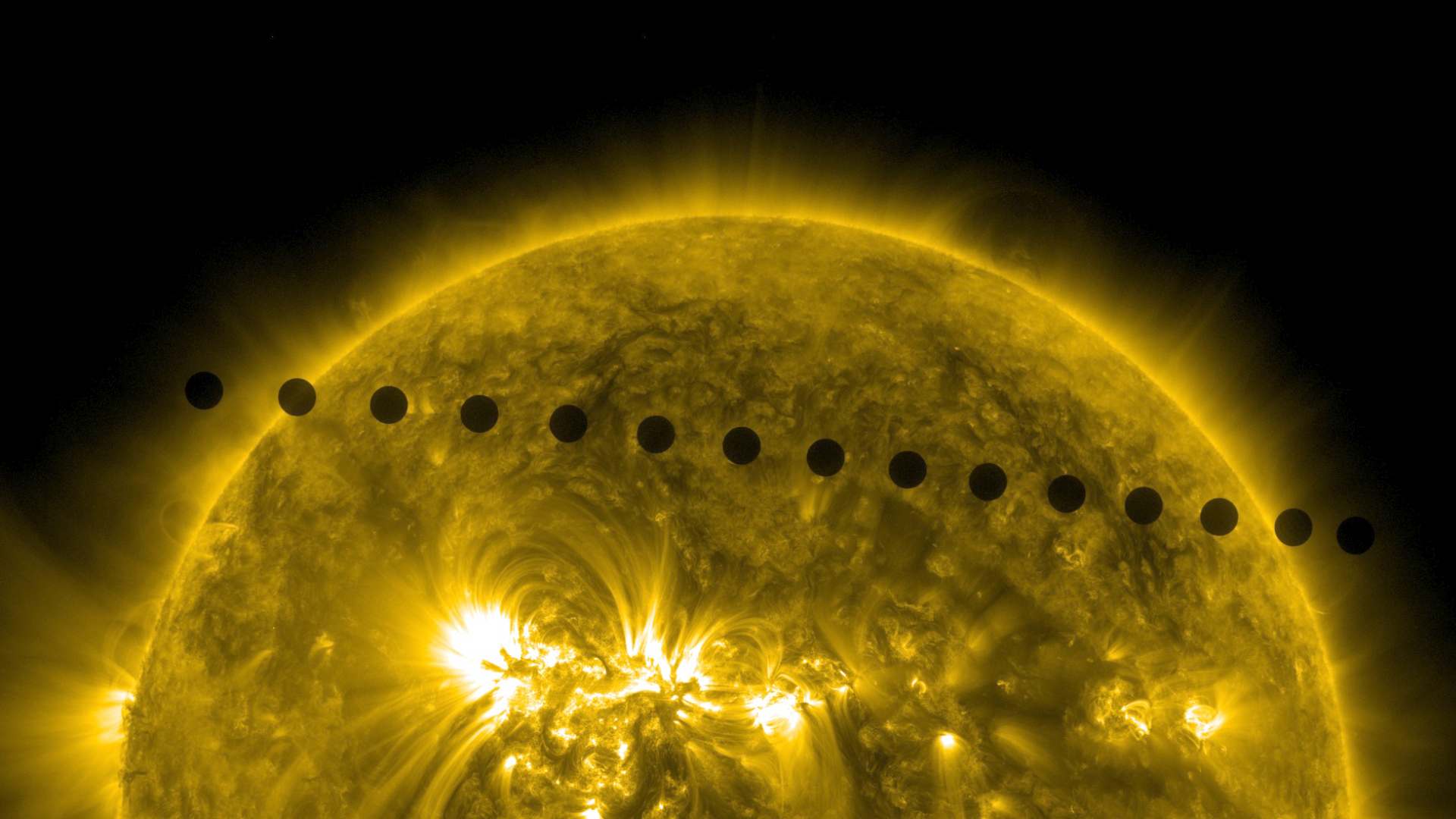
The image above is a composite of several wavelengths of extreme ultraviolet and visible light. You can clearly see the path Venus makes as it follows its orbit.
Image courtesy of NASA/SDOHow Can We Characterize Planetary Atmospheres?
Exoplanet atmospheres can be studied by observing their transits at different wavelengths. Planets with atmospheres similar to Earth's, for instance, may produce deeper transits at shorter (bluer) wavelengths.
POET will use this technique — known as transit spectroscopy — to detect whether an exoplanet has an atmosphere and gather clues about what it's made of. These observations will help identify exoplanets suitable for further, more detailed atmospheric characterization with the James Webb Space Telescope.

Questions POET Will Investigate
- What are the statistical properties of exoplanet atmospheres?
- Are most exoplanet atmospheres hazy like Venus's, or clear like Earth's?
- When does an atmosphere transition from cloudy to clear?
- How does atmospheric scattering depend on the amount of energy a planet receives from its host star?
Why is the sky blue? And what does that have to do with POET?
Our sky is blue because of a phenomenon called Rayleigh scattering. As sunlight enters Earth's atmosphere, the light with smaller wavelengths (mostly blue hues) is scattered by particles in the atmosphere itself.
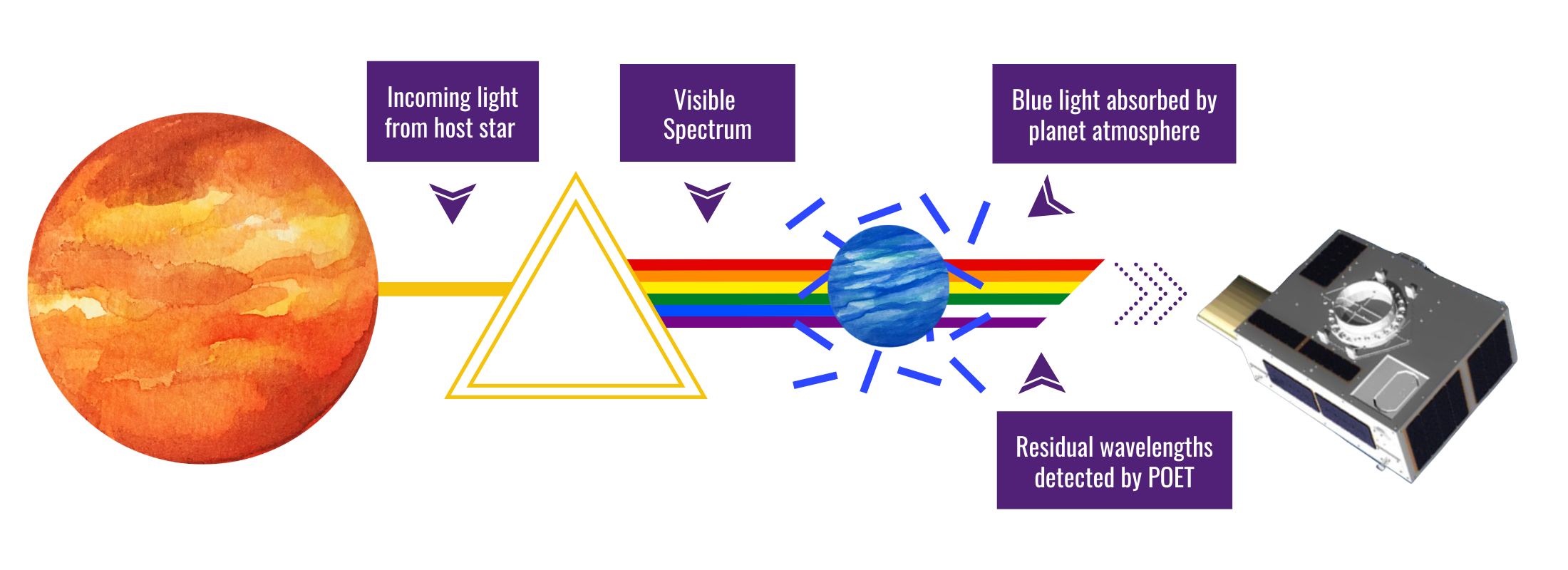
POET uses this same principle to examine the atmospheres of exoplanets. By measuring how much light a planet blocks at different wavelengths, we can begin to understand its composition.